
Engagement
There's no one-size-fits-all trick for keeping players hooked. There are proven ideas, though, and on the web, the first session is the one that counts.
Design for session 0
Web players have shorter sessions and return less often than mobile players, so the first session carries most of the weight. Quick, satisfying, repeatable loops of around 3 minutes perform best, and about an hour of content is usually the right scope: sprawling progression systems that work on mobile rarely translate, and memory limits how much content fits in a small build anyway. Make the first minutes brilliant before making the tenth hour deep.
Ideas that work
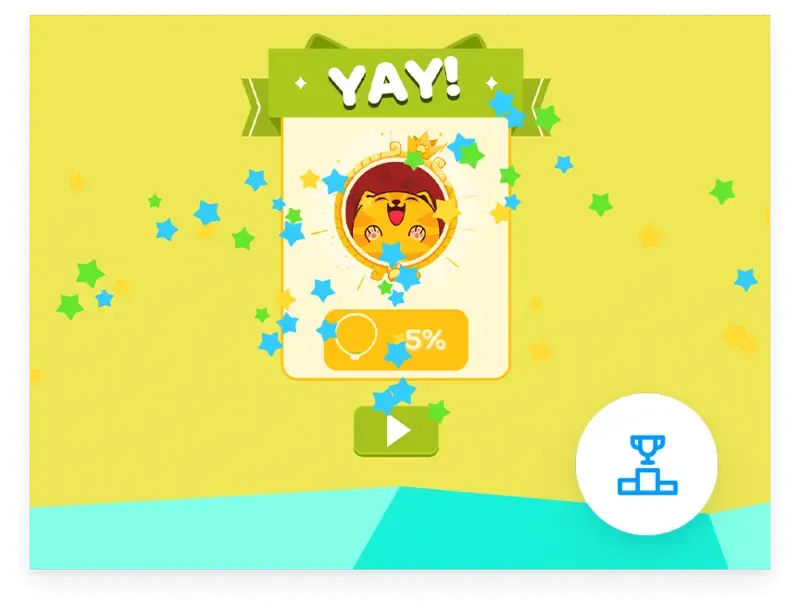
- Congratulate the player. Confetti, a happy sound, a few words of praise at every milestone. Puffy Cat's victory screen has all the hallmarks, plus a happy cat for good measure.
- Set clear goals. Finishing a level is a short-term goal; add long-term ones too. Stickman Hook dangles a new character at the end of every level, and players keep swinging.
- Tune the difficulty. Start easy, ramp gradually, and avoid sudden walls. Level Devil is a hard game that still scales bit by bit, introducing new mechanics as it goes.
- Support touch and keyboard. Players should navigate with mouse and keyboard alike: WASD or arrows through menus, space or return for the primary button.
- Keep gameplay continuous. Across every genre, games where the player can constantly perform an action outperform games with waiting and downtime.
Test it Playtesting shows you exactly where players stop and start losing interest. Stuck means a difficulty problem, while drifting away means it’s time for a reward or a new challenge, so read the signal and match the fix. Player fit tests then confirm whether that fix actually moved playtime.